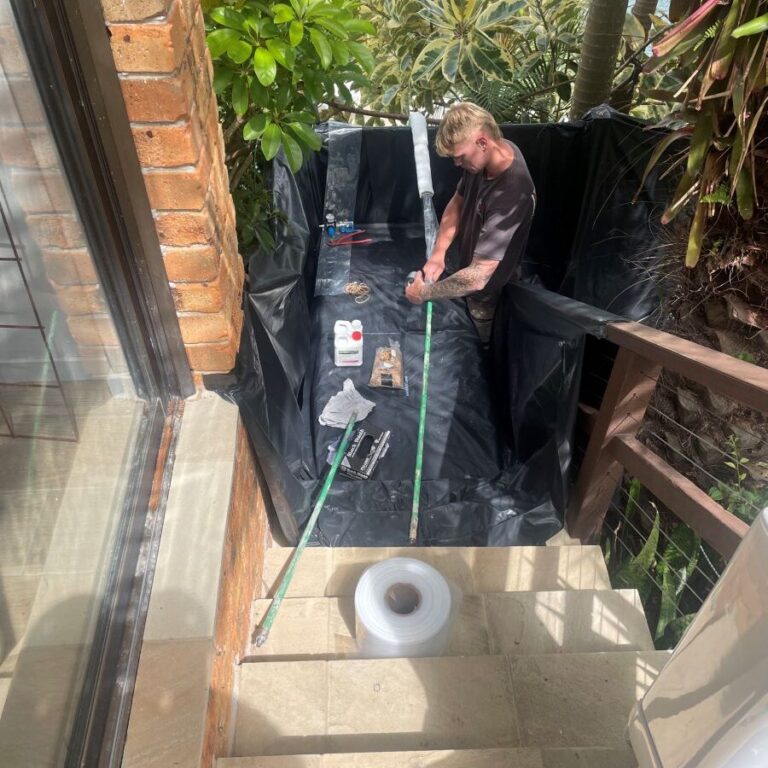
Pipe Relining vs Replacement — Why We Do Pipe Relining In-House (No Subcontractors)
When a plumber tells you that your pipe has collapsed or the root intrusion is too severe to clear, you’re facing a choice: reline the pipe or dig it up and replace it. These aren’t interchangeable options, they suit different problems, and the company doing the work matters almost as much as which method is right for your situation.
We’ve been doing pipe relining in the Sutherland Shire and Southern Sydney, we do not use subcontractors. Here’s how the two methods actually compare, and why the relining vs replacement decision isn’t as simple as “relining is always cheaper” or “replacement is always better.”

What Pipe Relining Actually Is
Short answer: Pipe relining inserts a new structural liner inside the existing pipe. It seals cracks, root entry points and minor collapses without digging up your yard, driveway or landscaping.
The process:
- CCTV camera inspection to assess the pipe condition and confirm relining is viable
- Hydro jet clean to remove all debris, roots and scale from the pipe interior
- A fibreglass or CIPP (cured-in-place pipe) liner is impregnated with resin and inserted into the pipe
- The liner is inflated against the pipe wall and the resin is cured (either with UV light, hot water, or ambient air depending on the system)
- Post-reline camera inspection to confirm the seal and check flow
The result is a structurally sound pipe within the old pipe, effectively a new pipe in place, without excavation.
When Pipe Relining Is the Right Call
Relining suits pipes where the host pipe is largely intact but compromised. The typical scenarios we see in Sutherland Shire:
Tree root intrusion. The Sutherland Shire has heavily vegetated suburbs: Caringbah, Gymea, Como, Engadine, Menai. Tree roots, particularly fig, bottle brush, and liquidambar, find hairline cracks in terracotta joints and work their way in. The pipes in older homes were installed with rubber-ring or cement joints that gap over time. Relining seals those joints permanently so root re-entry isn’t possible at that point.
Cracked or fractured terracotta and fibro cement pipes. Shire homes from the 1950s-1980s typically have terracotta sewers and stormwater pipes. These develop longitudinal cracks over time as the ground moves. Relining restores the structural integrity without the cost of full excavation.
Multiple access-restricted locations. When the affected section runs under a concrete driveway, a deck, landscaping, or close to the house foundation, excavation creates significant additional damage. Relining through an existing access point preserves those surfaces.
Long sections with root intrusion at known joint points. We can reline continuous sections rather than individual joints, which addresses the whole vulnerable run rather than patching one problem and waiting for the next one to appear.
When Pipe Replacement Makes More Sense
Relining isn’t always the right answer. Being honest about this is part of how we work.
Severely collapsed sections. If the pipe has collapsed to the point where a liner can’t pass through or won’t have adequate host pipe support, it needs to come out. Our CCTV camera inspection identifies this upfront, we won’t attempt a reline on a pipe that’s structurally incapable of holding one.
Incorrect fall (pipe gradient). A blocked or slow drain caused by a section of pipe that’s settled and lost its gradient isn’t a relining problem, it’s a fall problem. Relining over a flat or back-pitched section won’t restore flow. That needs physical correction.
Very short or accessible sections. If the blocked section is short, easily accessible, and pipe condition is poor enough that replacement is clearly superior over the next 20 years, sometimes dig-and-replace is simpler and comparably priced. We’ll tell you this at the assessment stage, not after we’ve started.
Root intrusion in mains (council infrastructure). If the root intrusion point is in the council sewer main rather than your private pipeline, it’s Sydney Water’s responsibility, not a property owner’s fix. We identify this during the CCTV inspection.
Why We Do Pipe Relining In-House
A lot of plumbing companies offer pipe relining, but many outsource the actual relining work to a third-party contractor. They manage the job, a relining specialist shows up to do the liner installation, and the plumber is the go-between.
We don’t work that way. Our team does the CCTV inspection, the hydro jet, the liner installation, and the post-reline camera check. It’s the same crew from diagnosis to completion.
Why it matters:
Accountability. When something goes wrong, or when a question comes up six months later, there’s one phone number and one team that did everything. With subcontracted relining, responsibility can get diffuse quickly.
Assessment integrity. We’re not incentivised to call a reline on a job that actually needs replacement just because relining is easier to sub out. Our assessment is based on what the camera shows, not on what generates a relining job.
Scheduling control. Subcontracted jobs depend on the third party’s availability. We control our own schedule, which means we can often turn around an urgent relining job faster than companies that rely on an external subcontractor’s diary.
We’ve held our NSW Contractor Licence (93566C) and Qualified Supervisors Licence (67936C) since 2000. The technical depth to do relining properly in-house took years to build. It’s a genuine part of how we operate, not a marketing claim.
Pipe Relining in the Sutherland Shire, What’s Different
Southern Sydney has some specific factors that make relining particularly relevant:
Age of pipe infrastructure. The Shire’s established suburbs (Caringbah, Miranda, Sutherland, Como, Oyster Bay) have a lot of pre-1980 terracotta infrastructure. These pipes have been in the ground for 50+ years and are well past the point where root intrusion and cracking is common.
Established tree canopy. The Shire’s leafy character is part of what makes it attractive to live in, and exactly why root intrusion is so prevalent. Older fig and bottle brush trees have root systems that extend well beyond the visible canopy.
Concrete driveways and established landscaping. Sutherland Shire homes typically have mature gardens and concrete drives that represent significant investment. Dig-and-replace under a 30-year-old concrete driveway or through an established garden is genuinely destructive and expensive to reinstate. Relining avoids all of that.
If You’re a Strata Manager or Body Corporate
Multi-level residential buildings in the Shire, particularly units in Cronulla, Caringbah, Miranda and Sutherland, have shared pipework that runs through common property and individual lots. Pipe relining is well-suited to strata contexts because it minimises disruption to residents and avoids major excavation works in common areas.
We work on strata drainage regularly and understand the documentation and scheduling requirements for body corporate jobs. A proper CCTV inspection report is part of our standard process, useful for your maintenance records and insurance purposes.
What This Article Isn’t For
If you have a blocked drain that’s never been CCTV inspected and you don’t know what’s causing it, relining may or may not be the right answer. A jet clean and camera inspection first is the only way to know. We don’t quote relining sight-unseen.
If you’re getting quotes and someone is offering you relining without doing a camera inspection first, that’s a flag worth noting.
Questions About Pipe Relining in Sutherland Shire
How long does pipe relining last?
Quality CIPP (cured-in-place pipe) relining carries a manufacturer warranty of 50 years. In practice, a well-done reline on a pipe that was a good candidate for relining should outlast any remaining lifespan concerns about the original host pipe.
Can pipe relining be done in the rain?
Generally yes, access conditions matter more than weather. The liner installation and curing process happens inside the pipe, so surface weather doesn’t affect it. We’ll advise if conditions are a genuine issue for a specific job.
Will tree roots come back after relining?
Not at the relined section, the liner is a continuous sealed surface with no joints for roots to enter. If there are other unlined pipe sections nearby, roots can still enter there. A full camera inspection before relining identifies the complete extent of root intrusion so you can address everything in one job.
Is pipe relining covered by home insurance?
It depends on the policy and the cause. Some home and contents policies cover gradual leak damage and the cost of exposing and repairing the source. Relining is sometimes covered under this, sometimes not. Check your policy excess and definitions before assuming either way.
How much does pipe relining cost in Sutherland Shire?
Relining cost depends on the pipe diameter, the length of the section, and the access configuration. It’s not a figure we can quote without seeing the camera footage. Call us for an inspection and we’ll give you a straight number based on what’s actually there.
Do you use CIPP or fibreglass relining?
We use CIPP (cured-in-place pipe) relining, which suits the range of pipe diameters and configurations we typically encounter in Sutherland Shire residential and commercial work. The CCTV inspection informs which system is most appropriate for each job.
Talk to Us About Your Pipes
If you’ve got a recurring blocked drain, a suspected crack or root problem, or you want to understand your options before committing to either relining or replacement, give us a call. We’ll do the camera inspection, show you what we find, and give you a straight assessment of which approach makes sense.
Call Craig’s team on 0418 408 333 or visit our pipe relining service page for more on our process. For Sutherland Shire blocked drain emergencies, we’re available now.
The Blocked Drain Guys, Craig Lays, owner since 2000. NSW Contractor Licence 93566C, Qualified Supervisors Licence 67936C. Kirrawee, NSW. In-house pipe relining (no subcontracting). Sutherland Shire, Cronulla, Caringbah, Miranda, Sutherland, Como, Gymea, Menai, Engadine and surrounding suburbs.